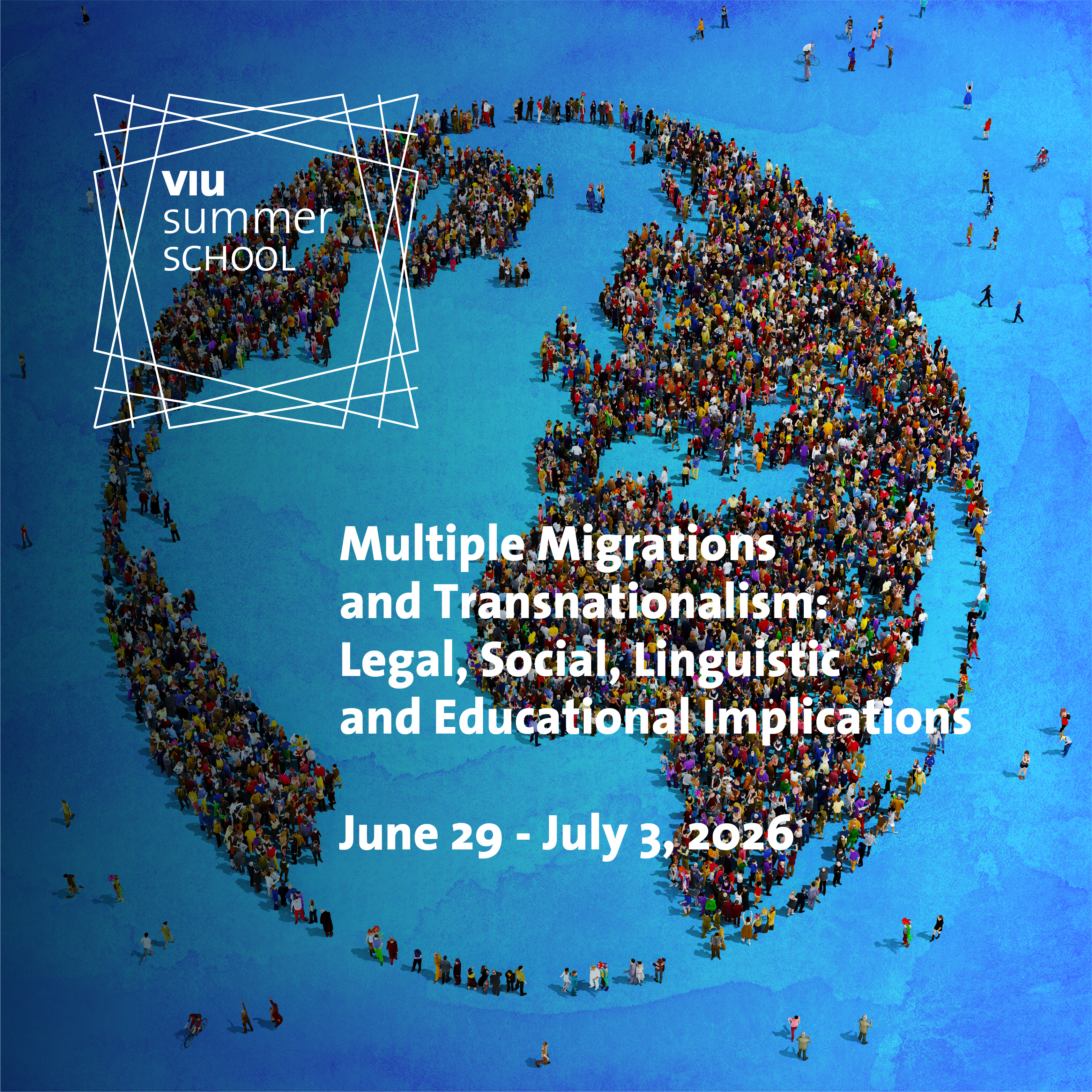
June 29 - July 3, 2026 | 1st edition
Call for applications: closed
This one-week summer school offers a multidisciplinary approach to the study of multiple migrations and transnationalism. Traditionally, migration research has focused on receiving countries, primarily examining immigration and integration. In recent decades, increasing attention has been paid to the complex logics and processes of migration. Across many parts of the world, multiple migration— encompassing linked internal and international migration, circular migration, or multinational migration—has become a common migratory phenomenon. Understanding these diverse patterns of mobilities and their trajectories is crucial to addressing the broader social, economic, and political challenges faced by migrants and the countries they move through.
Student participants in this course will be encouraged to rethink the conventional view of international migration as a straightforward journey from country of origin to country of destination. They will also reflect on the infrastructure and reasons for and the processes and outcomes of multiple migrations, which may include the conscious or unconscious acquisition of resources and knowledge—such as economic, legal, educational, and linguistic capital—that could be beneficial or essential for future migration destinations. This course incorporates perspectives from the fields of law, sociology and social linguistics. Law is a fundamental aspect in the analysis of multiple migrations and return migrations: there are issues of citizenships which can be acquired at the expense of the nationality of origin, but also issues of reunification with one own family, and fear of being persecuted once back to the country of origin. Some cases dealt with by the Court of Justice of the European Union will be examined (loss of EU nationality, new pact on migration and asylum) and a intersectional human rights-based perspective will be offered throughout the analysis.
Migration—why it occurs, how it unfolds, and what social impacts it generates—has long been a central concern of sociological inquiry. It is often rooted in global inequalities, facilitated by social ties, and shaped by social, institutional, and material infrastructures. Migration also has profound consequences for individuals, communities, and the societies in which they are embedded. This course explores multiple forms of migration by engaging with recent literature that investigates their underlying causes, the processes of skill construction and career building they entail, and the often contradictory directions mobility can take across different dimensions.Language and education are fundamental aspects of the migration experience. Migrants have complex sociolinguistic repertoires that may be influenced by their diverse migration trajectories. Topics will include language maintenance and shift, the preservation of linguistic and cultural heritage, and transnational language practices. We will also address the issue of why destination countries often fail to recognise individuals' linguistic and cultural expertise, as well as explore how children who migrate multiple times manage to navigate the challenges of education.
Venice itself serves as an ideal case study, with its largest migrant community—the Bangladeshi community—exemplifying high levels of transnationalism. Many members of this community have engaged in internal migration within Italy, onward migration to other European countries, or return migration. This case will be an integral part of the program.
Faculty
Francesco Goglia, University of Exeter (Scientific Coordinator)
Sara De Vido, Ca’ Foscari University of Venice
Gracia Liu-Farrer, Waseda University
Who is it for?
Applications are open to MA and PhD students in Sociology, Human Rights, Law, Cultural Studies, Sociolinguistics, Education, Migration Studies. Undergraduate students in their final year of studies can also apply.
Learning outcomes for participants
- The ability to critically analyse and challenge traditional migration theories, particularly those that view migration as a linear process from origin to destination and engage with more complex models such as circular, onward and return migration.
- A multidisciplinary approach to migration studies, integrating insights from sociology, law, sociolinguistics, and education to address the multifaceted nature of migration experiences.
- An understanding of the ethical dilemmas and policy
challenges surrounding migration, with a particular focus on issues such as the recognition of migrants' skills, cultural expertise, and their rights in destination countries.
- The skills to collaborate effectively in cross-cultural settings, fostering a deeper understanding of global migration dynamics through interaction with scholars and peers from diverse backgrounds.
- Practical approaches to migration management, exploring real-world case studies such as the transnational Bangladeshi community in Venice and select cases adjudicated by the Court of Justice of the European Union.
Credits
A Certificate of attendance will be issued at the end of the course.
Number of ECTS credits allocated: 2
Fees
Students of VIU member universities:
€ 300 incl. VAT
Students of other universities:
€ 600 incl. VAT
VIU Alumni are eligible for a reduced fee.
The fees will cover tuition, course materials, lunches in the VIU cafeteria and Social events.
Student participants will be responsible for covering their own travel expenses to and from Venice, accommodation and local transportation.
PhD candidates and post-docs from EU universities may be eligible for Erasmus+ mobility grant support. Candidates should consult the International Office in their own university for information about the calls for applications for funding. VIU will provide any supporting documentation requested for such applications. Contact VIU Erasmus office: erasmus@univiu.org
Applicants must submit the application form, a letter of motivation – which should include a brief description of the candidate’s research interests, a curriculum vitae and a photo.
The Program will admit 25 student participants.
For further information, please download the brochure and the program or write to: summerschools@univiu.org