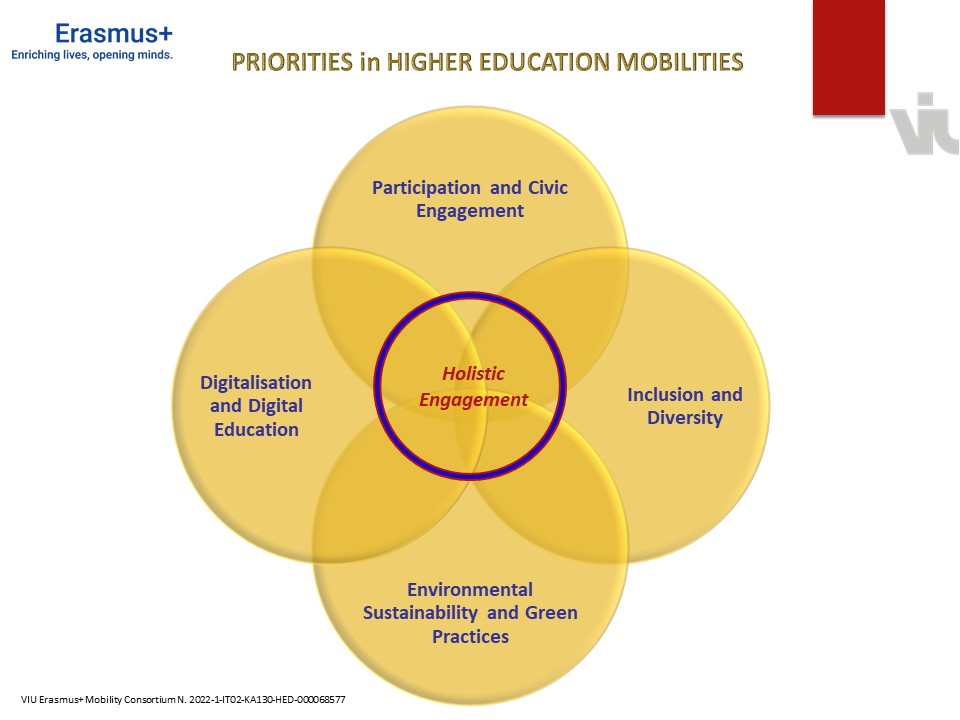

The Erasmus+ Programme prioritizes several key areas to enhance education, training, and youth engagement across Europe:
1. Inclusion and Diversity
Erasmus+ promotes equal opportunities and accessibility for all, focusing on individuals with fewer opportunities. National Agencies develop tailored inclusion plans to support diverse participants, while the Inclusion and Diversity Strategy addresses barriers such as disabilities, health issues, educational challenges, cultural differences, social and economic factors, discrimination, and geographical obstacles.
2. Digital Transformation
The program aims to equip citizens with essential digital skills for the modern age, supporting the Digital Education Action Plan (2021-2027). Initiatives focus on developing a robust digital education ecosystem and enhancing digital competencies across all sectors, fostering both basic and advanced skills for active participation in society.
3. Environment and fight against climate change
Erasmus+ emphasizes sustainability and environmental responsibility, aligning with the European Green Deal. The program supports projects that educate participants on climate issues and promote sustainable practices, prioritizing green initiatives and carbon-neutral approaches in all activities.
External resources: Sustainable Erasmus+ Travel
4. Participation in democratic life, common values and civic engagement
The program encourages active citizenship and civic engagement by enhancing understanding of the European Union and its values. It supports projects that foster critical thinking, media literacy, and participation in democratic processes, particularly among youth, through the Youth Participation Strategy and Toolkit.
Engagement with the Erasmus+ Priorities at Venice International University: